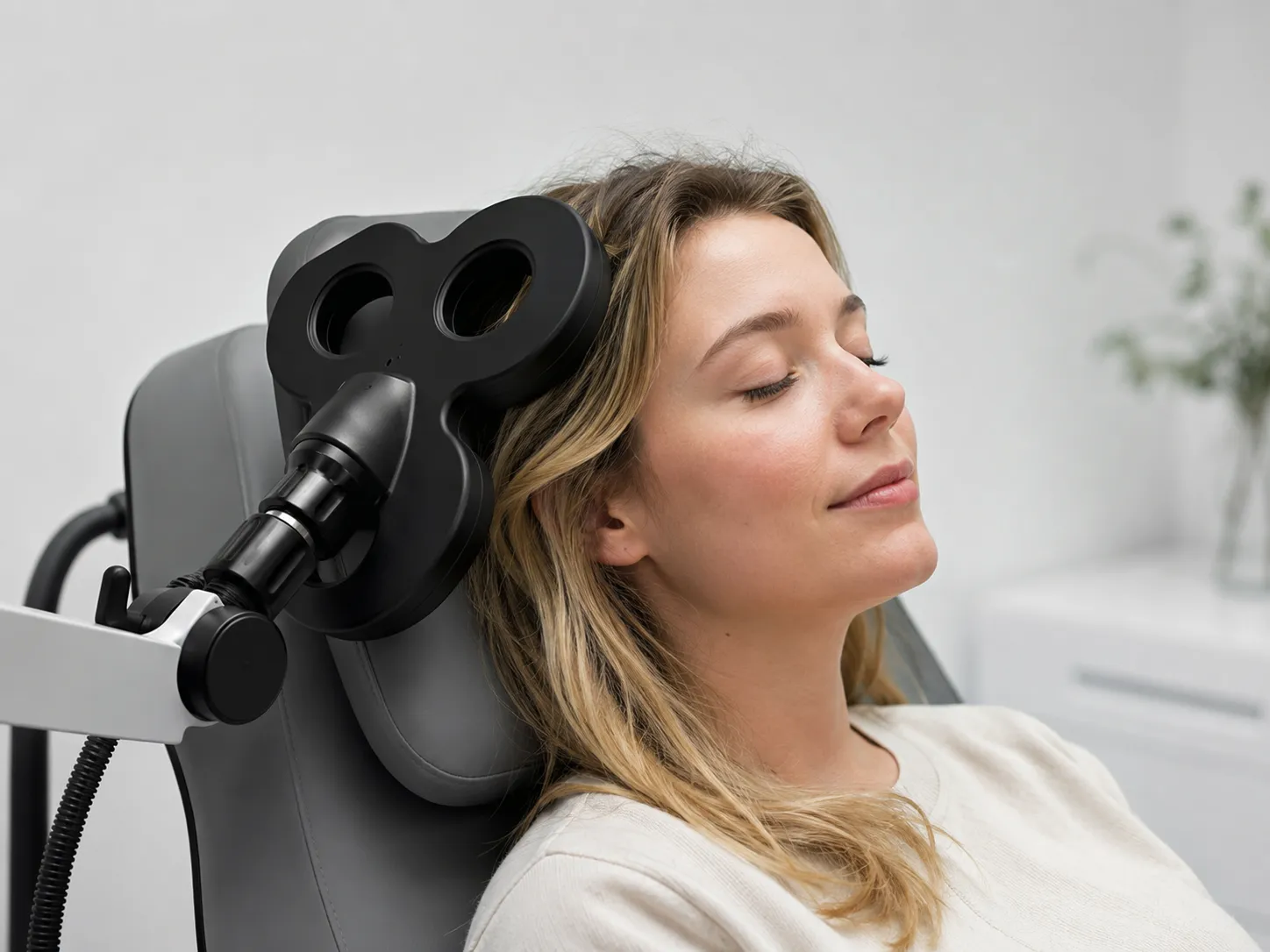
About TMS
What Is TMS / rTMS?
Transcranial Magnetic Stimulation uses precisely targeted magnetic pulses to stimulate underactive nerve cells in brain regions associated with mood regulation. Repetitive TMS (rTMS) delivers these pulses in rapid sequences to produce lasting neurological changes.
Unlike antidepressants, TMS works directly at the source with minimal systemic side effects. No sedation required. Patients drive themselves to and from appointments.
FDA-cleared for treatment-resistant depression (2008), OCD (2018), and MDD with comorbid anxiety (2021). Clinical studies report 50–60% remission rates in treatment-resistant patients.
Conditions We Treat
- Major Depressive Disorder
- Treatment-Resistant Depression
- Anxiety Disorders
- Obsessive-Compulsive Disorder (OCD)
- Post-Traumatic Stress Disorder (PTSD)
- Bipolar Depression
- Post-COVID Brain Fog
- Chronic Migraines
The Process
How TMS Treatment Works
01
Initial Evaluation
Meet with our neurologist for a comprehensive mental health and medical history review.
02
Treatment Planning
A personalized TMS protocol is designed based on your specific diagnosis and brain mapping.
03
Daily Sessions
20–37 minute sessions, typically 5 days/week for 4–6 weeks. No anesthesia, no downtime.
04
Progress Monitoring
Your provider tracks response throughout treatment and adjusts parameters as needed.
FAQ
Common Questions
Begin Your TMS Journey
Most insurance plans accepted. Same-week evaluations available.